Insights < BACK TO ALL INSIGHTS

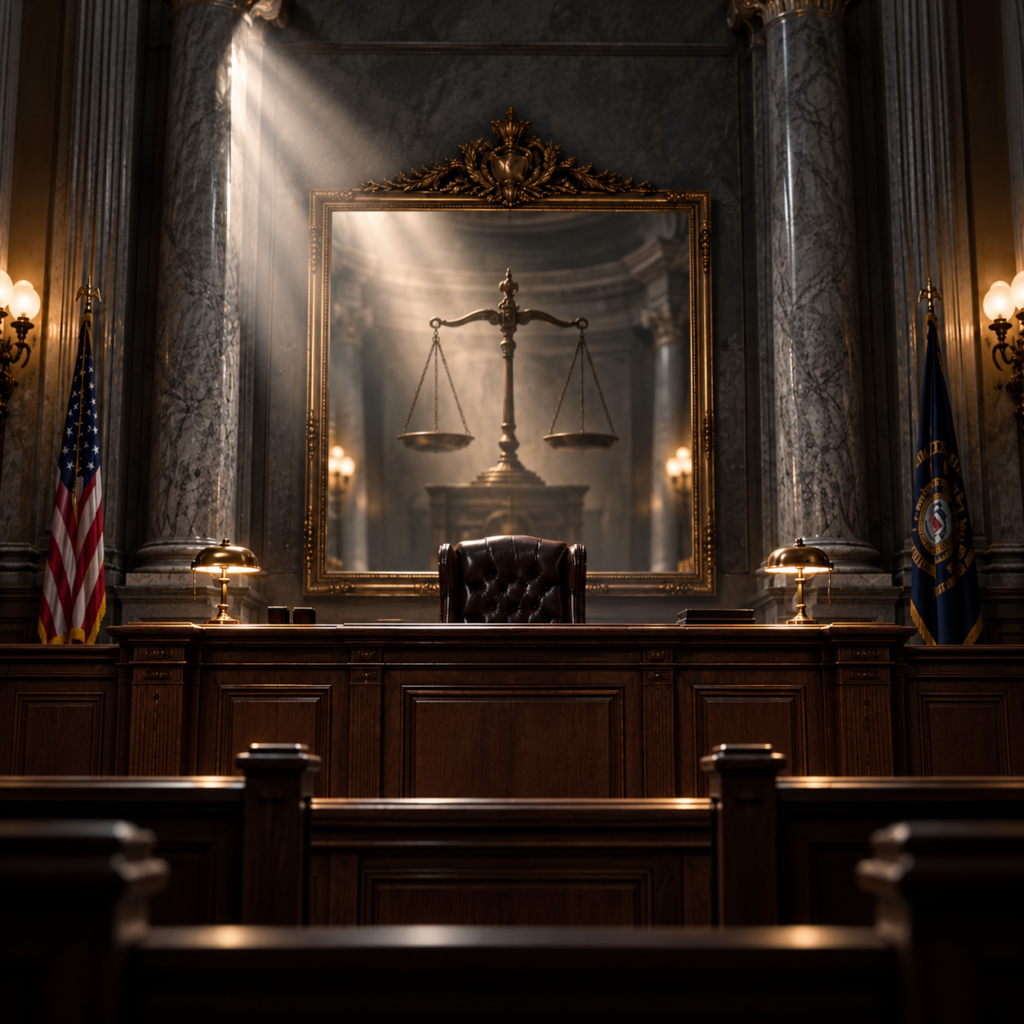
Judging the Judges
FEATURED
October 2, 2026
Judging the Judges
By: Lauren Scribner
Judges are in the business of holding people accountable for crimes and misconduct—but how do we hold judges accountable for their own ethical lapses? Recently, in a moment of frustration, Florida Second Circuit Judge J. Layne Smith told three attorneys practicing in his courtroom that he “would like to tell the deputy to pull his gun and shoot all three of [them] as far as [his] level of frustration right now.”[1] Yes—you read that correctly. A presiding judge vocalized his thought to have attorneys practicing in his courtroom shot by courtroom security. What should the consequence be for using such threatening language? A mere public reprimand and recusal from that case?[2] Or, should there be some sort of tangible punishment?…
Dismissive of Dismissal
September 25, 2026
Dismissive of Dismissal
By: James Trusty
During the two Trump administrations, a trend has begun to emerge of federal judges challenging the once-unrestricted authority of the Department of Justice (DOJ) to dismiss indictments. The longstanding framework of separation of powers suggests this judicial pushback is unsupported activism, but the judges claim the Federal Rules of Criminal Procedure (“Rules”) do not relegate their role to rubber stamping. Ultimately, this trajectory may lead…
In the age of AI, litigators must read between the lines—literally.
August 18, 2026
In the age of AI, litigators must read between the lines—literally.
By: Robert Ward
In the age of AI, litigators must read between the lines—literally. Any attorney who has litigated a case against a party proceeding pro se is familiar with the common refrain that courts liberally construe pro se filings.[1] This leniency was not enough for one Connecticut litigant. In a scheme that gives new meaning to the phrase “reading between the lines,” pro se plaintiff Matthew Elliot…
Grassley’s Case Against DOJ Stance on Financial Fraud Is Vastly Overstated
April 9, 2012
Grassley’s Case Against DOJ Stance on Financial Fraud Is Vastly Overstated
By: Ifrah Law
In recent weeks, Sen. Charles Grassley (R-Iowa) has criticized the Department of Justice’s handling of executives that some argue are responsible for the financial crisis. Sen. Grassley, the ranking minority member of the Senate Committee on the Judiciary, held a hearing in February that looked at mortgage fraud, foreclosure abuse and lending discrimination practices. During his opening statement at that hearing, Sen. Grassley stated, “The…
Nevada Case Points to Perils of Assertion of 5th Amendment in Civil Cases
March 12, 2012
Nevada Case Points to Perils of Assertion of 5th Amendment in Civil Cases
By: Ifrah Law
One of the hardest decisions on which a lawyer may be called upon to advise a client in civil litigation is the decision whether to assert the Fifth Amendment privilege. On the one hand, the overlap between pending civil and criminal matters may make it dangerous for the client to make statements that could incriminate him or her in the criminal case. On the other…
D.C. Appeals Court Rejects Challenge to Admission of Handwriting Evidence
March 8, 2012
D.C. Appeals Court Rejects Challenge to Admission of Handwriting Evidence
By: Jeffrey Hamlin
If there was ever an open question as to whether forensic handwriting identification is admissible under D.C.’s common law of evidence, the D.C. Court of Appeals has finally put that question to rest. On February 9, 2012, the Court of Appeals held that handwriting comparison and identification, as practiced by FBI examiners, passes the Frye test for admissibility. The issue arose after Robert Pettus’ jury…
DOJ Goes After Smaller Fraudsters, Lets Big Fish Escape
March 5, 2012
DOJ Goes After Smaller Fraudsters, Lets Big Fish Escape
By: Nicole Kardell
Successful criminal prosecutions of mortgage fraud seem to have one thing in common: a fraud figure well below $10 million. One of the recent cases that generated a fair amount of press involved the convictions of co-conspirators in a mortgage scheme carried out by an ex-NFL player. That scheme, which took place during the housing boom in the early 2000’s, resulted in 10 convictions. Former…
Justice Would Be Served by an ‘Open File’ Policy for Prosecutors
March 2, 2012
Justice Would Be Served by an ‘Open File’ Policy for Prosecutors
By: Jeff Ifrah
A couple of years ago, the U.S. Department of Justice made an effort to systematize and improve its discovery obligations under Brady v. Maryland, the 1963 Supreme Court case that requires prosecutors to disclose information in their files that would tend to exculpate criminal defendants. A U.S. attorney, speaking at a conference of defense lawyers, commented at the time that the department takes its Brady…