Insights < BACK TO ALL INSIGHTS

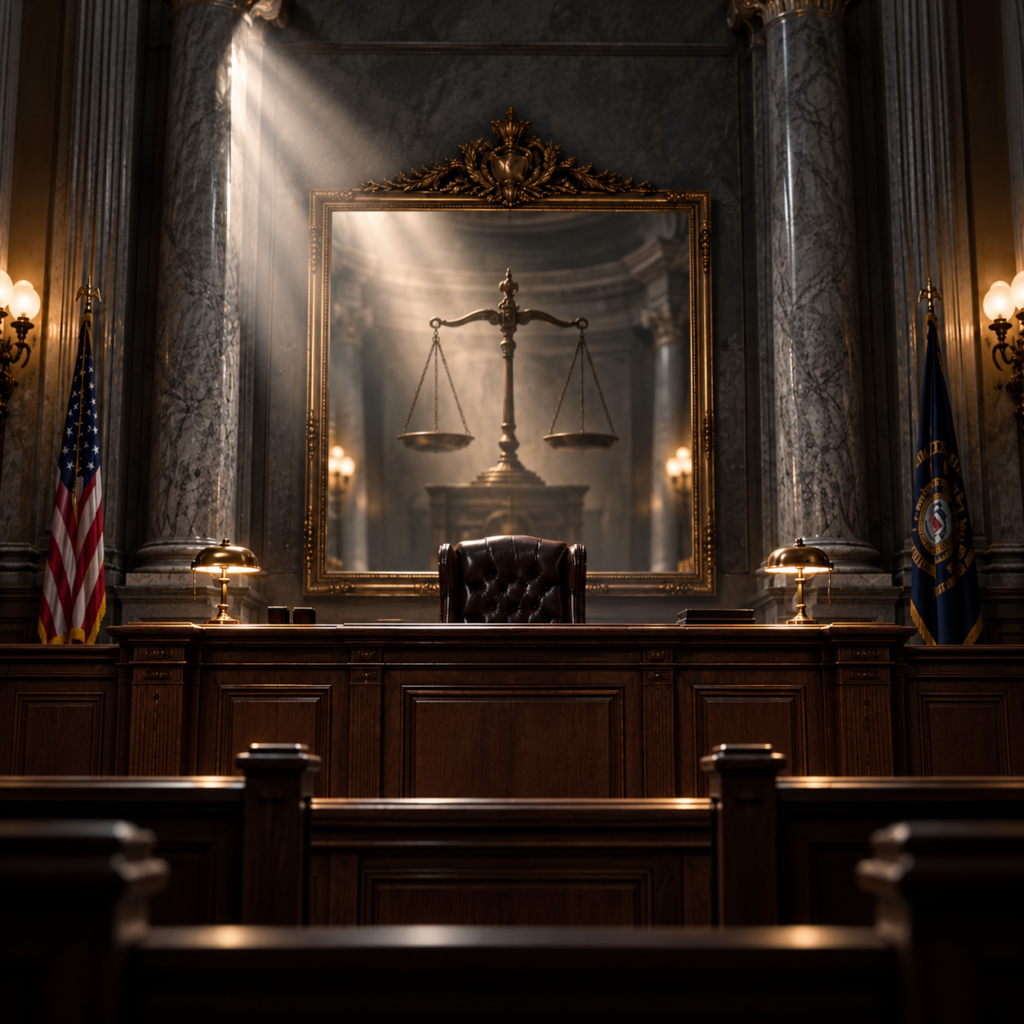
Judging the Judges
FEATURED
October 2, 2026
Judging the Judges
By: Lauren Scribner
Judges are in the business of holding people accountable for crimes and misconduct—but how do we hold judges accountable for their own ethical lapses? Recently, in a moment of frustration, Florida Second Circuit Judge J. Layne Smith told three attorneys practicing in his courtroom that he “would like to tell the deputy to pull his gun and shoot all three of [them] as far as [his] level of frustration right now.”[1] Yes—you read that correctly. A presiding judge vocalized his thought to have attorneys practicing in his courtroom shot by courtroom security. What should the consequence be for using such threatening language? A mere public reprimand and recusal from that case?[2] Or, should there be some sort of tangible punishment?…
Dismissive of Dismissal
September 25, 2026
Dismissive of Dismissal
By: James Trusty
During the two Trump administrations, a trend has begun to emerge of federal judges challenging the once-unrestricted authority of the Department of Justice (DOJ) to dismiss indictments. The longstanding framework of separation of powers suggests this judicial pushback is unsupported activism, but the judges claim the Federal Rules of Criminal Procedure (“Rules”) do not relegate their role to rubber stamping. Ultimately, this trajectory may lead…
In the age of AI, litigators must read between the lines—literally.
August 18, 2026
In the age of AI, litigators must read between the lines—literally.
By: Robert Ward
In the age of AI, litigators must read between the lines—literally. Any attorney who has litigated a case against a party proceeding pro se is familiar with the common refrain that courts liberally construe pro se filings.[1] This leniency was not enough for one Connecticut litigant. In a scheme that gives new meaning to the phrase “reading between the lines,” pro se plaintiff Matthew Elliot…
Bitcoin Equal to Money According to District Court Ruling
August 12, 2014
Bitcoin Equal to Money According to District Court Ruling
By: Jeffrey Hamlin
Is it possible to commit money laundering with virtual currency? At least one federal judge thinks so. Last month, U.S. District Judge Katherine Forrest refused to dismiss a money laundering charge premised on the use of a Bitcoin-based payment system. She is the first federal judge to hold that the federal money laundering statute is broad enough to encompass the use of Bitcoin in financial…
NY Legalizing Medical Marijuana with the Compassionate Care Act
July 11, 2014
NY Legalizing Medical Marijuana with the Compassionate Care Act
By: Steven Eichorn
Severely ill patients in New York State are celebrating Gov. Andrew Cuomo’s signature of a bill that legalized medical marijuana in New York for many severely ill patients[1]. As noted by Assembly Speaker Silver in his remarks, “With this agreement, we are assuring access to that much-needed relief while ensuring the tightest possible regulation and state supervision.” Indeed, the New York bill does contain many…
The Right to Remain Silent Does Not Extend to Computer/Phone Passwords
July 8, 2014
The Right to Remain Silent Does Not Extend to Computer/Phone Passwords
By: Ifrah Law
Recently the Massachusetts Supreme Judicial Court ruled that under certain circumstances, a court may compel a criminal defendant to provide the password to encrypted digital evidence without violating the defendant’s constitutional rights. This is an increasingly prevalent issue that has divided courts across the country and may be presented to the United States Supreme Court for review soon. Leon Gelfgatt was indicted in 2010 for…
U.S. Court of Appeals Decision: Cell Location Data is Protected Under Individual’s Expectation of Privacy
July 2, 2014
U.S. Court of Appeals Decision: Cell Location Data is Protected Under Individual’s Expectation of Privacy
By: Jeffrey Hamlin
The U.S. Court of Appeals for the Eleventh Circuit recently considered whether cell site location data is protected by the Fourth Amendment. On June 11, 2014, the court issued its decision in favor of privacy rights: the court held that cell site location information is within the cell phone subscriber’s reasonable expectation of privacy. If officers want the data, they must obtain the subscriber’s consent…
Court: Police Need Warrant to Search Phone. But Guess What? They Get to Keep Your Phone While They Get One.
June 26, 2014
Court: Police Need Warrant to Search Phone. But Guess What? They Get to Keep Your Phone While They Get One.
By: Jeff Ifrah
Will cops still get access to cell phone data post arrest? You bet. Today’s Supreme Court decision just means they need to get permission from a judge before they start searching who you have been texting. And odds are very good, that permission will be granted. In a unanimous decision authored by Chief Justice Roberts, the United States Supreme Court held that law enforcement officers…